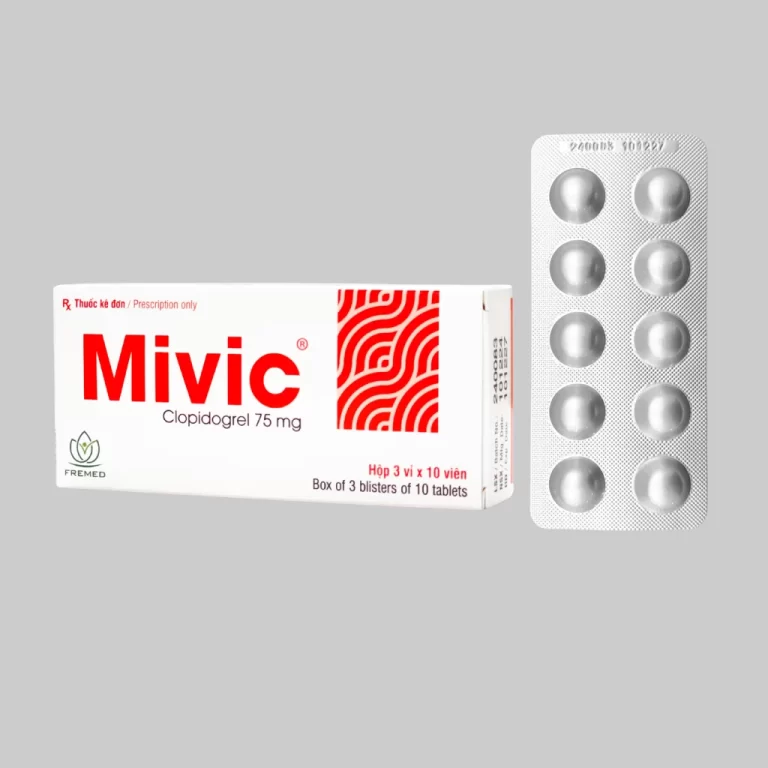
FRIPITOR 10
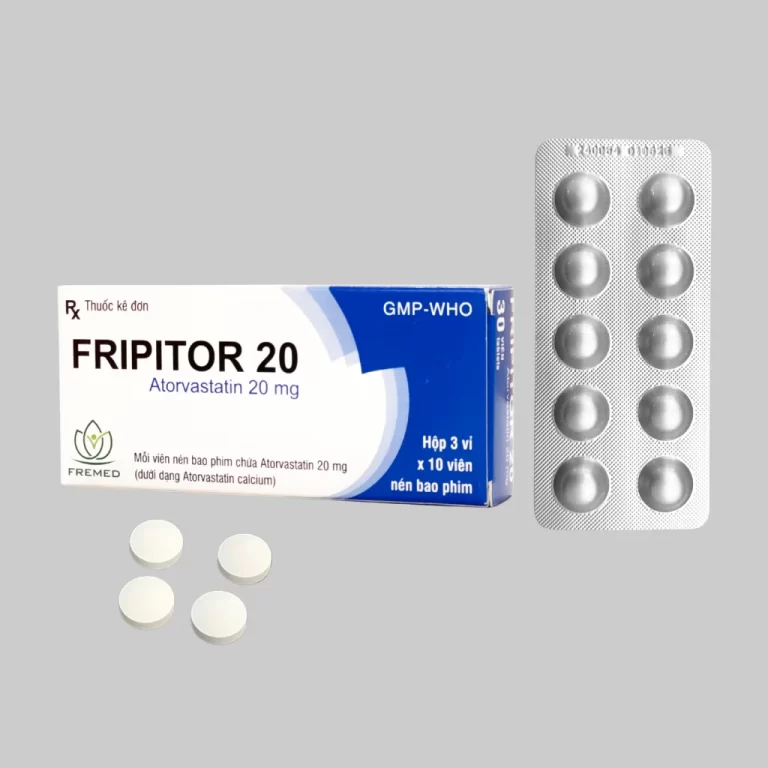
FRIPITOR 10
Active ingredient: Atorvastatin 10 mg (as atorvastatin calcium).
Description of dosage form: Film-coated tablet
Packaging: Box of 3 blisters x 10 tablets
Expiry date: 24 months from the date of manufacture.
Posology
General
Before instituting therapy with atorvastatin, an attempt should be made to control hypercholesterolemia with appropriate diet, exercise, and weight reduction in obese patients, and to treat other underlying medical problems. The patients should continue on a standard cholesterol-lowering diet during treatment with atorvastatin.
The dosage range of atorvastatin is 10 to 80 mg once daily. Doses may be given any time of the day, with or without food. Starting dose and maintenance doses should be individualized according to baseline LDL-C levels, the goal of therapy, and patient response. After initiation and/or upon titration of atorvastatin, lipid levels should be analysed within 2 to 4 weeks and dosage adjusted accordingly.
Primary hypercholesterolaemia and mixed hyperlipidaemia
The majority of patients are controlled with atorvastatin 10 mg once a day. A therapeutic response is evident within 2 weeks, and the maximum therapeutic response is usually achieved within 4 weeks. The response is maintained during chronic therapy.
Homozygous familial hypercholesterolaemia
Only limited data are available (see PHARMACODYNAMIC PROPERTIES).
The dose of atorvastatin in patients with homozygous familial hypercholesterolemia is 10 to 80 mg daily. Atorvastatin should be used as an adjunct to other lipid-lowering treatments (e.g. LDL apheresis) in these patients or if such treatments are unavailable.
Prevention of cardiovascular disease
In the primary prevention trials the dose was 10 mg/day. Higher doses may be necessary in order to attain LDL-C levels according to current guidelines.
Paediatric population
Hypercholesterolaemia
Paediatric use should only be carried out by physicians experienced in the treatment of paediatric hyperlipidaemia and patients should be re-evaluated on a regular basis to assess progress.
For patients with heterozygous familial hypercholesterolemia aged 10 years and above, the recommended starting dose of atorvastatin is 10 mg per day (see PHARMACODYNAMIC PROPERTIES). The dose may be increased to 80 mg daily, according to the response and tolerability.
Doses should be individualised according to the recommended goal of therapy. Adjustments should be made at intervals of 4 weeks or more. The dose titration to 80 mg daily is supported by study data in adults and by limited clinical data from studies in children with heterozygous familial hypercholesterolemia (see ADVERSE REACTIONS and PHARMACODYNAMIC PROPERTIES).
There are limited safety and efficacy data available in children with heterozygous familial hypercholesterolemia between 6 to 10 years of age derived from open-label studies. Atorvastatin is not indicated in the treatment of patients below the age of 10 years. Currently available data are described in sections ADVERSE REACTIONS, PHARMACODYNAMICS AND PHARMACOKINETICS but no recommendation on a posology can be made.
Other pharmaceutical forms/strengths may be more appropriate for this population.
Hepatic impairment
Atorvastatin should be used with caution in patients with hepatic impairment (see SPECIAL WARNINGS AND PRECAUTIONS FOR USE and PHARMACOKINETIC PROPERTIES). Atorvastatin is contraindicated in patients with active liver disease (see CONTRAINDICATIONS).
Renal impairment
Renal disease does not affect the plasma concentrations nor LDL-C reduction of atorvastatin; thus, dosage adjustment in patients with renal dysfunction is not necessary (see SPECIAL WARNINGS AND PRECAUTIONS FOR USE).
Elderly
Efficacy and safety in patients older than 70 using recommended doses are similar to those seen in the general population (see PHARMACOKINETIC PROPERTIES).
Co-administration with other medicines
In patients taking ciclosporin or the HIV protease inhibitor (tipranavir plus ritonavir) or the hepatitis C virus protease inhibitor (telaprevir), therapy with atorvastatin should be avoided.
In patients with HIV taking lopinavir plus ritonavir, caution should be made when prescribing atorvastatin and use the lowest dose necessary of atorvastatin.
In patients taking clarithromycin, itraconazole, or in patients with HIV taking a combination of saquinavir plus ritonavir, darunavir and ritonavir, fosamprenavir, or fosamprenavir and ritonavir, therapy with atorvastatin should be limited to 20 mg, and appropriate clinical assessment is recommended to ensure that the lowest dose necessary of atorvastatin is used.
In patients taking the HIV protease inhibitor nelfinavir or the hepatitis C virus protease inhibitor boceprevir, therapy with atorvastatin should be limited to 40 mg, and appropriate clinical assessment is recommended to ensure that the lowest dose necessary of atorvastatin is used (see SPECIAL WARNINGS AND PRECAUTIONS FOR USE and INTERACTIONS).
Administration
Oral administration.
INDICATIONS
Atorvastatin is indicated as an adjunct to diet to reduce elevated total-C, LDL-C, apo B, and TG levels and to increase HDL-C in patients with primary hypercholesterolemia (heterozygous familial and nonfamilial hypercholesterolemia) and mixed dyslipidemia (Fredrickson Types IIa and IIb), elevated serum TG levels (Fredrickson Type IV) and in patients with primary dysbetalipoproteinemia (Fredrickson Type III) who do not respond adequately to diet.
Atorvastatin is also indicated for the reduction of total-C and LDL-C in patients with homozygous familial hypercholesterolemia.
Prevention of Cardiovascular Complications
In patients without clinically evident coronary heart disease or with/without dyslipidemia but with multiple risk factors for coronary heart disease such as age, smoking, hypertension, diabetes, low HDL-C, or a family history of early coronary heart disease, atorvastatin is indicated to:
- Reduce the risk of fatal CHD and non-fatal myocardial infarction (MI)
- Reduce the risk of stroke
- Reduce the risk for revascularization procedures and angina pectoris
In patients with clinically evident coronary heart disease, atorvastatin is indicated to:
- Reduce the risk of myocardial infarction
- Reduce the risk of stroke
- Reduce the risk for revascularization procedures
- Reduce the risk of hospitalization for congestive heart failure
- Reduce the risk of angina
Pediatric patients (10 years to 17 years of age)
Atorvastatin is indicated as an adjunct to diet to reduce total-C, LDL-C, and apo B levels in boys and postmenarchal girls, 10 to 17 years of age, with heterozygous familial hypercholesterolemia if after an adequate trial of diet therapy, the following findings are present:
- LDL-C remains ≥ 190 mg/dl or
- LDL-C remains ≥ 160 mg/dl and
– There is a positive family history of premature cardiovascular disease or
– Two or more other CVD risk factors are present in the pediatric patient
CONTRAINDICATIONS
FRIPITOR is contraindicated in patients who have:
- Hypersensitivity to any component of this medication.
- Active liver disease or unexplained persistent elevations of serum transaminases exceeding 3 times the upper limit of normal
Or who are:
- Pregnant, breast-feeding, or of childbearing potential who are not using adequate contraceptive measures. FRIPITOR should be administered to women of childbearing age only when such patients are highly unlikely to conceive and have been informed of the potential hazards to the fetus.
Or
Co-administration of serum lipid-lowering statin with HIV protease inhibitors as well as the hepatitis C protease inhibitors may increase the risk of muscular injury, particularly rhabdomyolysis, nephrotic syndrome leading to renal failure and death.