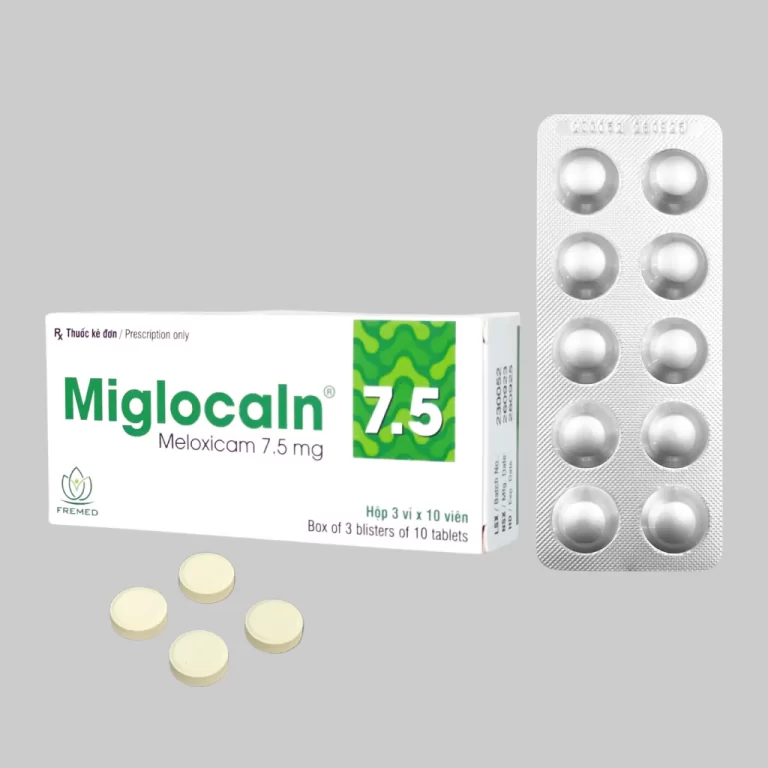
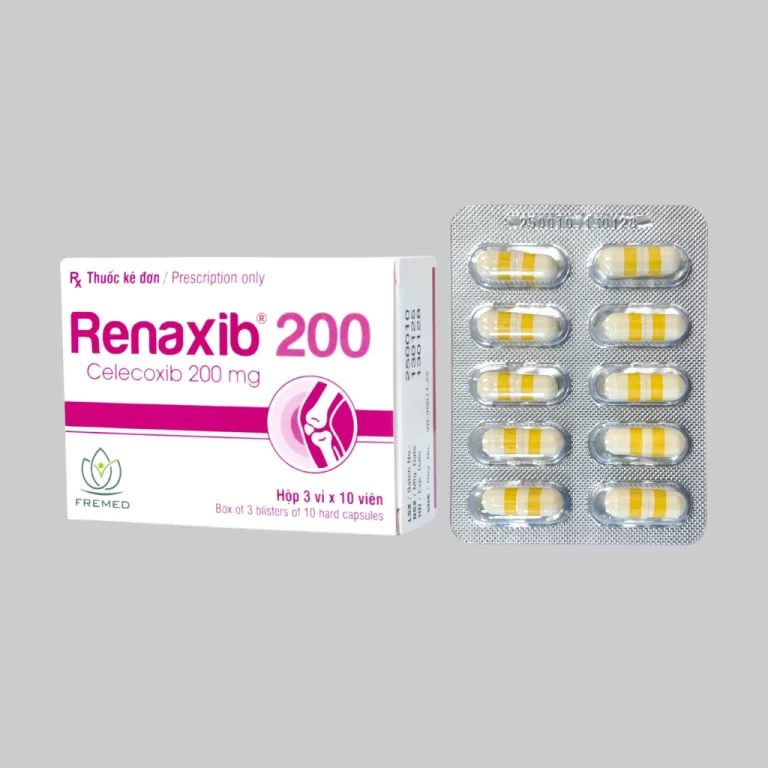
RENAXIB 100
RENAXIB 100
Active ingredient: Celecoxib 100 mg.
Dosage form: Hard capsule.
Packaging: Box of 3 blisters x 10 capsules.
Expiry date: 36 months.
Posology
Adults
Symptomatic treatment of osteoarthritis: The recommended dosage is 200 mg per day administered as a single dose or as 100 mg twice daily.
Symptomatic treatment of rheumatoid arthritis: The recommended dosage is 100 mg or 200 mg twice daily.
Ankylosing spondylitis: The recommended dosage is 200 mg per day administered as a single dose or as 100 mg twice daily. In a few patients, an increased dose of 400 mg daily may increase efficacy.
Management of acute pain: The recommended dosage is 400 mg initially, followed by an additional 200 mg dose if needed on the first day. On subsequent days, the recommended dose is 200 mg twice daily as needed.
Treatment of primary dysmenorrhoea: The recommended dosage is 400 mg initially, followed by an additional 200 mg dose if needed on the first day. On subsequent days, the recommended dose is 200 mg twice daily as needed.
CYP2C9 poor metabolisers
Patients who are known, or suspected to be CYP 2C9 poor metabolisers based on previous history/experience with other CYP 2C9 substrates should be administered celecoxib with caution. Consider starting treatment with half of the lowest recommended dose (see INTERACTIONS and PHARMACOKINETIC PROPERTIES – Metabolism).
Elderly
No dosage adjustment is generally necessary. However, for elderly patients with body weight less than 50 kg, it is advisable to initiate therapy at the lowest recommended dose.
Paediatric population
Juvenile rheumatoid arthritis (JIA)
| Paediatric patients (age 2 years and older) | Dose |
| ≥ 10 kg to ≤ 25 kg | 50 mg twice daily |
| > 25 kg | 100 mg twice daily |
Celecoxib has been studied in juvenile rheumatoid arthritis (JIA) patients 2 – 17 years of age. The efficacy and safety of celecoxib have not been studied beyond six months in children, or in patients with body weight less than 10 kg, or in patients with active systemic features (see PHARMACODYNAMIC PROPERTIES – Clinical trials)
Hepatic impairment
No dosage adjustment is necessary in patients with mild hepatic impairment (Child-Pugh Class A). For arthritis or pain in patients with moderate hepatic impairment (Child-Pugh Class B), celecoxib should be introduced at half the recommended dose.
There is no clinical experience in patients with severe hepatic impairment (Child-Pugh Class C) (see SPECIAL WARNINGS AND PRECAUTIONS FOR USE – Hepatic effects).
Renal impairment
No dosage adjustment is necessary in patients with mild or moderate renal impairment. There is no clinical experience in patients with severe renal impairment (see SPECIAL WARNINGS AND PRECAUTIONS FOR USE – Renal effects)
Concomitant administration of fluconazole
Celecoxib should be introduced at half the recommended dose in patients receiving fluconazole (a CYP2C9 inhibitor). Co-administration of celecoxib with drugs that are known to inhibit CYP2C9 should be done with caution (see INTERACTIONS).
Administration
For patients who have difficulty swallowing capsules, the contents of a celecoxib capsule can be added to applesauce, rice gruel, yogurt or mashed banana. To do so, the entire capsule contents must be carefully emptied onto a level teaspoon of room temperature applesauce, rice gruel, yogurt or mashed banana and should be ingested immediately with water. The sprinkled capsule contents on mashed banana should not be stored under refrigerated conditions and should be ingested immediately.
INDICATIONS
For the symptomatic treatment of osteoarthritis (OA), rheumatoid arthritis (RA).
For relief of the signs and symptoms of juvenile rheumatoid arthritis (JIA) in patients 2 years and older with body weight ≥ 10kg.
For relief of the signs and symptoms of ankylosing spondylitis (AS).
For the management of acute pain.
For the treatment of primary dysmenorrhoea.
CONTRAINDICATIONS
Patients with known hypersensitivity to celecoxib or any components of the drug product.
Patients with history of hypersensitivity to sulfonamides.
Patients who have experienced asthma, urticaria, or other allergic-type reactions after taking acetylsalicylic acid (aspirin) or other NSAIDs including other cyclooxygenase-2 (COX-2) specific inhibitors.
Treatment of peri-operative pain in the setting of coronary artery bypass graft (CABG) surgery (see SPECIAL WARNINGS AND PRECAUTIONS FOR USE).
Active peptic ulceration or gastrointestinal (GI) bleeding.
In pregnancy and in women of childbearing potential unless using an effective method of contraception. Celecoxib has been shown to cause malformations in the two animal species studied. The potential for human risk in pregnancy is unknown, but cannot be excluded.
Breast feeding.
Severe hepatic dysfunction (serum albumin <25 g/l or Child-Pugh score >10).
Patients with estimated creatinine clearance <30 ml/min.
Inflammatory bowel disease.
Congestive heart failure (NYHA II-IV).
Established ischaemic heart disease, peripheral arterial disease and/or cerebrovascular disease.